Prediabetes symptoms
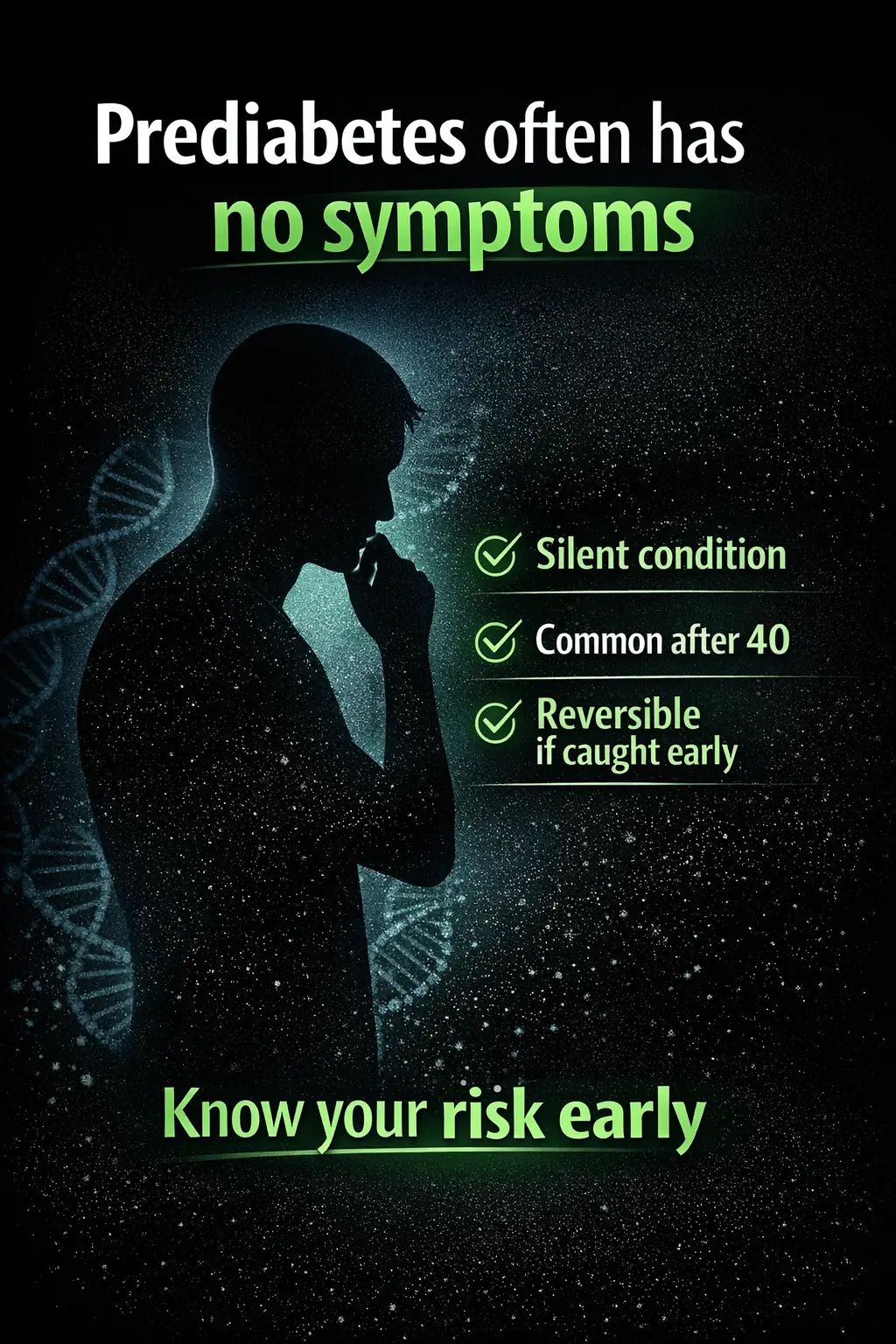
Most people with prediabetes feel completely normal. Early changes in blood sugar are often silent and picked up only on blood tests. When symptoms do appear, they are usually subtle and can overlap with many other conditions.
Many people notice nothing at all
Prediabetes describes a laboratory pattern, not a specific way of feeling. You can have fasting glucose or A1C in the prediabetes range and still:
- Work as usual
- Exercise without obvious issues
- Sleep “normally” most nights
- Have no clear warning signs
This is one reason why routine blood work is so important: the body can compensate for rising blood sugar for years before clear symptoms appear.
Subtle changes some people report
When symptoms are present, they tend to be vague and easy to blame on stress, lack of sleep or a busy lifestyle. Examples include:
- Feeling more tired than expected, especially after meals
- Difficulty concentrating or “brain fog” on some days
- Increased hunger or cravings for sweets and refined carbs
- Gaining weight around the waist over time
- More frequent urination and increased thirst in some cases
- Slow wound healing or skin changes that do not improve easily
- More frequent minor infections (for example colds, skin issues)
These signs are not specific to prediabetes, but when they appear together in someone with risk factors (family history, higher weight, low activity), they may justify a closer look at blood sugar.
Symptoms that may come from other causes
Some symptoms that people worry about are often driven by other conditions, not by prediabetes itself. For example:
- Unintentional rapid weight loss and feeling “wired” or shaky
- Strong tremor worsened by caffeine or energy drinks
- Insomnia, racing thoughts and intense restlessness
- Very fragile immunity and getting sick repeatedly
These patterns can be linked to thyroid disorders, chronic stress, anxiety, autoimmune issues or other hormonal problems. Blood sugar may still be affected, but it is rarely the only explanation.
When to get tested
You should consider asking for a blood test (fasting glucose or A1C) if:
- You have a family history of type 2 diabetes
- Your waist is increasing and activity is low
- You have high blood pressure or abnormal lipids
- You notice more fatigue, thirst or infections than usual
- You have thyroid or hormonal issues and feel run down
Only a healthcare professional can interpret your symptoms and lab values together and decide whether they fit prediabetes, another condition or both.
Next topic
Continue learning: What causes prediabetes? →