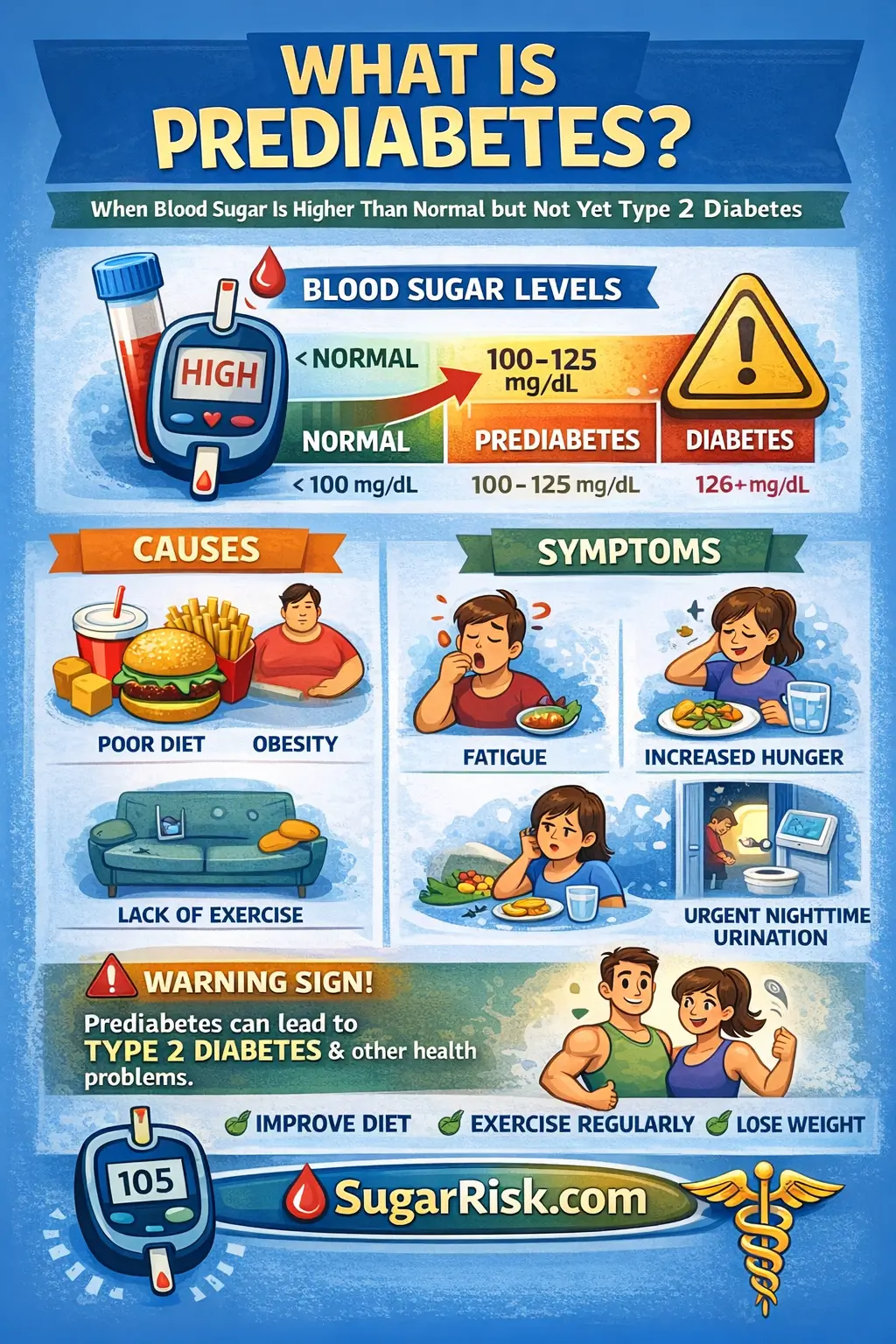
What is Prediabetes?
Prediabetes is a metabolic state where blood sugar is higher than normal, but not high enough to be classified as type 2 diabetes. It develops slowly and often produces no obvious symptoms, which is why millions of adults are unaware they have it.
How prediabetes develops
The condition usually begins when the body becomes less responsive to insulin – the hormone that helps move sugar (glucose) from the bloodstream into the cells. As insulin sensitivity decreases, the pancreas works harder and releases more insulin to compensate. Over time, this compensation becomes less effective, and blood sugar starts to rise.
Typical lab ranges used by clinicians
Healthcare organizations often use the following thresholds to describe early glucose changes:
- Fasting glucose: 100–125 mg/dL
- A1C: 5.7% – 6.4%
- 2-hour glucose during OGTT: 140–199 mg/dL
These numbers do not diagnose diabetes, but they signal that the body is struggling to manage sugar efficiently.
Who is most likely to develop it?
Prediabetes is more common in adults with a combination of the following:
- Higher body weight or larger waist circumference
- Low physical activity
- Family history of type 2 diabetes
- Past episodes of high blood sugar
- High blood pressure or certain lipid patterns
- Hormonal changes such as PCOS or history of gestational diabetes
Next topic
Continue learning: Prediabetes symptoms →
Why early detection matters
Prediabetes is not a permanent diagnosis. Many people can return their glucose to normal ranges through lifestyle adjustments, weight management, improved sleep, stress reduction and routine check-ups. Early awareness is often the key to preventing long-term complications.